NIGERIA: A CASE STUDY
The Nigerian democracy is gasping for breath not only because of the
poor performance by the political leaders but also because the people
have been compromised! I would explain. While those that have been
considered leaders have fallen short of our expectations and many cannot
in good conscience be regarded as such, the ordinary man, common man or
the people have also malfunctioned in a number of ways often justified
by poverty, illiteracy or ethnicity.
First is the Monetization of politics and economy. The Nigerian
politics is very lucrative and has therefore become a business activity.
To contest for positions such as those of the president, governor,
legislator, local government chairman or even a councillor, you must
either be loaded or have a “godfather”. You either need to borrow
massively from the bank or rely on someone, to bankroll your campaigns.
Whatever the case, the money must be returned to the source. In Nigeria,
we know that godfathers don’t bankroll a candidate for nothing, there
is always a string attached. The tragedy is that some of the people are
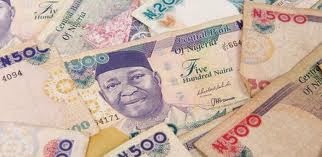
willing to sell their votes which represent their future for as low as
=N=5,000,($31) =N=2,000 ($12), or even =N=1,000 ($6). It is no news that
votes are bought for as low as =N=500 ($3) or even with a pint-size
portion of rice! With the buying of mandate, political office holders
have no social contract with the people to improve their economic
well-being. Who suffers? The people! Also, because of what has been
termed “representational corruption”, Nigerian politicians earn far more
than their colleagues in more developed societies like the UK and
India. All this means that the funds that ordinarily should have been
available for catering for the economic well-being of the people are
reduced.
Second is the tragedy of avoidance of politics by some of the best
brains in Nigeria. Nigeria does not have a dearth of thinking
individuals who truly have the interest of the country at heart. The
problem is that most of these people avoid politics. Where are the
intellectuals? You hear them say, “It’s a dirty game” and that they
don’t want to stain their hard earned reputations. This has not been
helpful as can be seen in the crop of leaders that rule the country
today. Nigeria indeed has and can produce better leaders. Again, good
governance can only be championed by a ruling class that is
developmental in every sense of the word. Therefore, our good materials
must be encouraged to come out to salvage the country in every stratum
of government the lack of which at the moment injures the prospects for
good governance while also contributing to the impoverishment of
Nigerians.
Third, good governance is again harmed by the ease at which people
resort to violence. Political violence is becoming a habit in Nigeria.
With violence, good governance becomes a secondary consideration in
political chess game. A leading scholar simply captures it as “violence
against democracy”. Today, violence (including the use of bombs) is now
an instrument that is deployed for group and individual interest. For
the political class, the habit of violence is one where political
competition amounts to what Claude Ake referred to as “warfare” to the
extent that almost all the politically motivated murders in Nigeria are
still unresolved!
At the level of the people, violence is also becoming rampant as
buttressed by mob actions and violent ethno-religious conflicts. This
was the case in Jos and Niger. Today, the Boko Haram violence has made
the worth of the Nigerian life trivial to a point that people are no
longer moved with news headlines of tens of deaths. Violence thus
diminishes good governance and also undermines human development.
Four is the absence of issue-based politics. With the massive
developmental challenges facing the country, it is pathetic that issues
of zoning and clandestine term agreements are enjoying the attention of
contenders and their followers. What sense is in zoning in the midst of
poverty, hunger and disease? Does poverty have an ethnic name that makes
it only Yoruba, Hausa or Igbo? Good governance is driven by minds that
are less concerned with petty issues of state of origin and other
sectarian considerations.
Five is the issue of corruption. Along with the Boko Haram crisis,
the fight against corruption is the most important fight in today’s
Nigeria even though, the Economic and Financial Crimes Commission (EFCC)
and sister organizations are doing their bit and could do more with the
support of the judiciary, the people and the civil society. Corruption,
if left unchallenged will destabilize a country’s efforts at fighting
poverty and hinder economic growth and development. According to
Mahmoud Moustafa of the World Bank fame, “empirical studies show that
countries with better redistribution of wealth enjoy longer periods of
economic development ... and countries suffering from corruption cannot
implement sound redistribution policies and thus are not expected to
take benefit from sustainable economic development despite embarking
upon economic growth from time to time for some reason or the other”.
Thus countries that have low corruption index enjoy positive growth
and development by providing greatest happiness for the greatest number
of the people while harmful consequence is the case in a country with
high corruption index. In addition, countries with high corruption
index also experiences dysfunctional institutions, unfair and unequal
treatments and constant encroachment of the rule of law.
Six is the problem of ethnicity. I must say that ethnicity in its
self is not a bad thing if it promotes healthy competition among the
groups that make up the Nigerian state. But it has historically been a
justification for violence, promotion of redundancy and bad governance.
People have been killed for no other reason than by the fact that they
are from another ethnic group. Mediocre and run of the mills individuals
have been retained in public offices for no other reason than the
ethnic group that they represent all in the name of satisfying the
federal character thereby depriving the country of quality leadership
based on merits.

Conclusion: What Role for the People and their Leaders?
I would conclude by stating that while good governance aid the economic
well-being of the people, it is critical for both the people and their
leaders to take certain actions. The leaders by now know what they
should do as represented in the need to prioritise the economic
well-being of the people, promote the democratisation of the polity
through the strengthening of institutions and embracing transparency and
accountability. Leaders should commit themselves to ensuring good
governance at all levels. The legislature must strive to gain the
support of the people by becoming proactive in its promotion of good
governance. The legislators in the performance of their oversights
functions should watch the executive and ensure that good policies are
implemented for the benefit of the people.
For the people, they must also become proactive. Civil society
Organizations and community based organizations as representatives of
the people should strengthen good governance from below by providing the
people with the tools they need to question and take charge of their
future. The media must also continue to hold the government accountable
to the people while Traditional rulers should avoid confirming
chieftaincy titles on corrupt politicians or their cronies who don’t
have any feasible means of livelihood other than being friends of
political office holders or their spouses. The intellectual class should
also take up the challenge of providing a critical intellectual
opposition to government. Specifically, they should constantly engage
the government on policies and actions that will boost the
socio-economic well being of the people and thereby enhance our
democratic development.
Being the excerpts of a paper delivered in Lagos recently
Source: Sahara Reporters


