Showing posts with label Goodluck. Show all posts
Wednesday, March 18, 2015
Nigeria begins 'final onslaught' against Boko Haram: govt
Nigeria has begun the "final onslaught" against Boko Haram, the country's national security spokesman said on Tuesday, after the militants were ousted from the strategic town of Bama.
On a visit to London, Mike Omeri told AFP that "significant strategic military successes and gains" had been made against the Islamists in recent weeks.
"Bama (the second biggest town in Borno state) was retaken yesterday (Monday) and we have Abadam, Gwoza and Askira as part of the remaining areas where we still have this presence," he said. Abadam, Gwoza and Askira are also in Borno, which has been worst hit by six years of violence and was under emergency rule from May 2013 to November last year with neighbouring Yobe and Adamawa.
The military announced that Adawama was "cleared" last Friday and that Yobe was retaken on Monday from Boko Haram, who have pledged allegiance to the Islamic State group in Syria and Iraq. There was no independent verification of the claimed successes, which followed the deployment last month of troops from Cameroon, Chad and Niger, as well as foreign mercenaries.
The operation not only aims at reducing the regional threat from the militants, after several cross-border attacks in recent months, but also to secure the northeast for elections to be held. Voting was initially scheduled for February 14 but was rescheduled to March 28 because of the counter-offensive on the grounds that soldiers would not be available to provide security on polling day.
Omeri refused to be drawn on when the insurgency would be declared over, although President Goodluck Jonathan said in an interview published last Wednesday that Borno would be free in three weeks. "As for the other three areas (Abadam, Gwoza and Askira), help is coming," said Omeri, who announced last week that 36 towns had been recaptured from Boko Haram.
"Soldiers are still out there working hard and we're en route to the final onslaught because it has started already from Bama." The insurgency has left more than 13,000 people dead since 2009 and forced some 1.5 million others to flee their homes.
But Omeri said that once the affected communities were free, "they will be advised to return home and continue with their lives". Jonathan is facing a stiff challenge from the main opposition candidate Muhammadu Buhari, a former military ruler who has attacked the president's record on tackling Boko Haram.
Buhari, who headed a military government for 20 months from December 1983, has accused Jonathan of consistently failing to provide leadership. Chief among the retired general and his party's complaints have been an alleged lack of support and equipment provided to soldiers, which only recently seems to have been rectified.
The opposition has also voiced fears for the integrity of the overall result if the hundreds of thousands of people displaced by the violence in its northeast stronghold are disenfranchised. Repeated bomb and suicide attacks in recent weeks have raised fears about the safety of polling stations.
But Omeri told a separate news conference: "We are confident there will be a level of security to enable citizens to vote." Boko Haram were now "running with their tails between their legs", he added, indicating that the militants were being contained within the northeast.
"Boko Haram are not being pushed into neighbouring countries, we are pushing them to an area where we are finding a solution to their menace," he said. Reports have suggested that Boko Haram fighters were amassing in Gwoza, which Boko Haram leader Abubakar Shekau declared part of a caliphate last year and is considered the group's headquarters.
On private military contractors, including South Africans who have been seen alongside Nigerian troops in the northeast, Omeri denied reports that some have been fighting on the front line. He maintained their presence was only for training purposes and no mercenaries were involved.
Source: AFP
Tuesday, February 17, 2015
New York Times calls GEJ lousy, says he's trying to frustrate Buhari
In an article titled 'Nigeria's Miserable Choices' Published on New York Times yesterday Monday February 16th, and written by the editorial board of the US newspaper, they described Nigerian president as a 'lousy incumbent' & described Buhari as a 'former autocratic leader'.
See article below
The Nigerian government was supposed to hold presidential elections this past weekend, which presented voters with the dispiriting choice of keeping a lousy incumbent or returning to power a former autocratic leader. Now they will have to wait at least six weeks to cast votes.
The Nigerian election commission said earlier this month that it had pushed back the vote until at least March 28,
after the country’s security chiefs warned that they could not
guarantee the safety of voters in northeastern areas of the country
where Boko Haram, the extremist militant group, captured international
attention last spring when it abducted hundreds of schoolgirls. On
Friday, Boko Haram fighters attacked a village in
neighboring Chad for the first time, an alarming sign of the group’s
expanding strength in a region that also includes areas of Cameroon and
Niger.
Any
argument to delay the vote might be more credible if President Goodluck
Jonathan’s government had not spent much of the past year playing down
the threat posed by the militants and if there were a reasonable
expectation that the country’s weak military has the ability to improve
security in a matter of weeks.
It
appears more likely Mr. Jonathan grew alarmed by the surging appeal of
Muhammadu Buhari, a former military ruler who has vowed to crack down on
Boko Haram. By dragging out the race, Mr. Jonathan stands to deplete
his rival’s campaign coffers, while he continues to use state funds and
institutions to bankroll his own.
That
Mr. Buhari, who helped launch a coup against a democratically elected
government in 1983 and ruled until late 1985, has emerged as potential
winner is more of an indictment of Mr. Jonathan’s dismal rule than a
recognition of the former military chief’s appeal.
Nigerian
voters have grown increasingly worried about the stunning rise of Boko
Haram, which has committed terrorist atrocities including bombings.
The
abductions and attacks by the group have exposed the weaknesses of
Nigeria’s armed forces and the dysfunction of the government. Although
Mr. Jonathan’s government has in the past been less than enthusiastic,
and at times obstructive, in response to offers of American and European
aid, he appears to be growing increasingly worried. In an interview
with The Wall Street Journal last week, he said he would welcome
American troops to fight the insurgency.
Beyond
security matters, entrenched corruption and the government’s inability
to diversify its economy as the price of oil, the country’s financial
bedrock, has fallen have also caused Nigerians to look for new
leadership. Nigeria, the most populous nation in Africa, and a
relatively young democracy, cannot afford an electoral crisis. That
would only set back the faltering effort to reassert government control
in districts where Boko Haram is sowing terror. The security forces may
not be able to safeguard many districts on Election Day. But
postponement is very likely to make the security threat worse.
Thursday, February 5, 2015
Forensic audit report indicts NNPC, NPDC
The Nigerian National Petroleum
Corporation and the Nigerian Petroleum Development Company were on
Thursday indicted by the investigative forensic audit done by
PriceWater House Coopers into the allegations of unremitted funds to the
Federation Accounts.
In the report, the accounting firm asked both organisations to refund to the federation account “a minimum of $1.48bn.”
PriceWater House, was last year hired
to carry out the exercise following an allegation by the former
Governor of the Central Bank of Nigeria, Lamido Sanusi, that $20bn was
not remitted to the Federation Account by the NNPC.
Sanusi, who is now the Emir of Kano,
had written a letter to President Goodluck Jonathan that $49bn was not
remitted to the Federation Account by the NNPC.
But following the controversy which the letter generated, a committee was set up to reconcile the account.Sanusi later recanted and said the unremitted fund was $12bn which he later changed to $20bn.
Wednesday, October 8, 2014
Elma's Dream (The GUARDIAN, April 4, 2011, Pp 64) - A Goodluck Campaign in 2011
When President Goodluck won the PDP primary elections, my father was very happy.
He said it was the beginning of good things to come. He said
Power will be fixed and there will always be light so I can do my home
work. Education will be improved and all childern will go to good
schools and my school will have computers and teach music like they do
in private schools; water will be steady and I wont (won't) have to go
to the well to fetch water. All roads in Nigeria will be fixed so no one
has to die because of bad roads. The president says he will Transform
Nigeria. I believe he will, because my father says so.
Friday, May 16, 2014
U.S. Criticizes Nigeria Over Kidnapping Response

WASHINGTON (Reuters) - A top U.S. Defense Department official on Thursday said Nigeria had been too slow to respond to the threat of Boko Haram but Washington is committed to helping fight the Islamist militants and rescue over 200 girls seized from their school a month ago.
U.S. officials have said the effort to retrieve the girls is now a
top priority but has been complicated by Nigeria's early reluctance to
accept assistance, and U.S. rules banning aid to foreign forces that
have committed human rights abuses.
"In general Nigeria has failed to mount an effective campaign against
Boko Haram," Alice Friend, the Pentagon's principal director for
African Affairs, told a hearing of the Senate Foreign Relations
Committee's Africa subcommittee.
"The Department has been deeply concerned for some time by how much
the Government of Nigeria has struggled to keep pace with Boko Haram’s
growing capabilities," Friend said.
Friend said it was troubling that atrocities have been perpetrated by some Nigerian forces during operations against Boko Haram.
Robert Jackson, acting assistant Secretary of State for African
Affairs, said Washington has urged Nigeria to reform its approach to the
group. "When soldiers destroy towns, kill civilians and detain innocent
people with impunity, mistrust takes root," he said.
The U.S. Embassy in Abuja offered help almost immediately after the
kidnapping. But it was two weeks before U.S. Secretary of State John
Kerry called Nigerian President Goodluck Jonathan to offer aid, which
was accepted on May 4, Jackson said. Friend said U.S. reconnaissance
flights started days later.
Nigeria has been reluctant to designate Boko Haram as a terrorist
threat at the United Nations, but Jackson said it has changed its
position and he expected that designation imminently.
Delaware Senator Chris Coons, the subcommittee chairman, said that
the odds the girls would get home safely were diminishing every day.
"It took too long for the Nigerian government to respond to the
girls’ abduction. It took too long for the Nigerian government to accept
offers of assistance from the United States, the United Kingdom, France
and China, and once accepted, it took too long for that assistance to
be fully implemented," he said. The U.S. officials said Boko Haram is a
regional threat that is becoming international, with ties to al Qaeda.
They said the Pentagon and Department of State were developing a
"regional response," including improved security along Nigeria's borders
with Chad, Niger and Cameroon.
"We've definitely determined that there are links between al Qaeda in
the Islamic Mahgreb and Boko Haram. They have probably provided at
least training, perhaps financial support," Jackson said.
(Reporting by Patricia Zengerle; Editing by Sofina Mirza-Reid, Andrew Hay and Ken Wills)
Source: Reuters Mobile
Monday, May 12, 2014
Goodluck Jonathan's Slow Motion Response to an Appalling Crisis
By Stephen Hayes - Associated Press
The kidnapping of hundreds of schoolgirls, followed by the announcement by the leader of Boko Haram – the terrorist group which has claimed responsibility for taking them – that the girls are to be either sold or forced into slavery is beyond appalling. It amounts to mass rape. It also does no honor to Islam. Although child marriage may be permitted under Islam, certainly kidnapping and rape is not. It is primitive and barbaric that deserves the strongest condemnation of the entire world.
According to news reports, more than 300 school teenage schoolgirls were kidnapped from their school in a remote section of northeastern Nigeria last April 15.
The mass kidnapping and the response by Nigerian President Goodluck Jonathan's administration may determine the future of his tenure and who is to succeed him. So far, the political leadership has handled the situation poorly. The question that hangs over the whole matter is how could more than 300 girls be kidnapped en masse and no one seems to know where any of them are? The president of Nigeria has admitted publicly he has no idea where the girls are, and only now has he begun to ask for outside help in finding the girls.
The whole matter raises many other questions, including why few, if any, of the northern governors, most of them in opposition to the Jonathan administration, have publicly been of assistance. One hopes that some have been quietly working with helping in the search. Nigerian politics, like those of many countries, are especially complicated. The northern governors, nearly all of them Islamic, believe that Jonathan has twice broken a political understanding that the ruling People's Democratic Party has that the presidency rotate between the north (mostly Islamic) and south (mostly Christian). Jonathan is a southerner who assumed the presidency in 2010 when his northern predecessor fell ill and died. Some northern factions believed Jonathan violated the agreement by standing for election to a full term in 2011 and then did so again by announcing that he will seek re-election. There may be no sense of urgency by the governors of the north to help Jonathan out of this. That they seem to know as little as Jonathan about the girls also raises questions about the connection between the rulers and the ruled, as well as the threat from Boko Haram that some may feel.
The Nigerian Government has also been slow in reacting to the crisis because much of their focus on Boko Haram has been a defensive one, aimed at protecting those participating in the upcoming World Economic Forum, to be held in Abuja this week. Several hundred of Africa’s top business leaders, along with various other representatives of Western governments and businesses are planning to be in Abuja for the group's annual Africa Forum. The forum’s presence in Abuja was to be a major feather in Jonathan's cap, and a showpiece of Nigeria for global business. Ironically, now the forum finds itself in a very awkward position of doing business as usual in the face of one of the most serious political crises in Nigeria since the Biafran Civil War. Yet, it is almost impossible for the group to cancel the forum, given that this program is a major part of their overall master plan for Africa. To cancel the forum would also be an enormous vote of no confidence in Nigeria’s ability to manage its most serious problems. The fact that the bulk of Nigerian security has focused on this meeting of the economic elite and not on the search for the schoolgirls has not gone unnoticed in Nigeria and elsewhere, as is underscored by demonstrations in New York and Washington.
How the Nigerian government handles these next 10 days may be not only the most important to Jonathan but to those that follow him.
Source: https://www.causes.com/causes/298145-for-a-corruption-free-nigeria/updates/911463-goodluck-jonathans-slow-motion-response-to-an-appalling-crisis?utm_campaign=post_mailer%2Fcause_update.cb_50474&utm_medium=email&utm_source=causes&ctag=9a229f9453c00f0b2d3ff4b9245d18ba96&ctoken=i6I-mGH4jKHnp-fSBu9ri0VP9fACWFicf0MsaWd1ufNph5zQqHvLkor_CB2j4i3TT73QATCQbVQEML3o6blXpKqBybHLDltK&uid=91781643
Thursday, May 8, 2014
Stop those trivialising schoolgirls’ abduction, Falana tells Jonathan
May 8, 2014 by Ade Adesomoju
Human rights lawyer, Mr. Femi Falana (SAN), has asked President Goodluck Jonathan to stop people from further trivialising the abduction of over 200 schoolgirls from Government Secondary School, Chibok, Borno State, on April 19.
The Lagos lawyer in a statement on
Thursday said the comment credited to “some people”, including the
President’s wife, Patience, that “no child was missing”, was
“incendiary” and capable of deepening the agony of the abducted
children’s parents.
“President Goodluck Jonathan should ensure that the abduction of
the innocent girls is not further trivialised in the interest of our
collective sensibility and public morality,” he stated.
He described as insensitive for some highly placed persons to
insist that there was no missing child despite the step by the Christian
Association of Nigeria to publish some of the abducted girls’ names.
He said, “In spite of the inauguration of the Presidential
Committee to investigate the abduction of the over 200 girls and the
publication of the names of about 185 of the missing girls by the
Christian Association of Nigeria some political leaders have insisted
that no child has been abducted.
“Such level of insensitivity is being displayed by highly placed
persons at a time that the Boko Haram leader, Abubakar Shekau has
admitted that the criminal sect abducted the innocent girls and
threatened that they would be sold into slavery.”
He queried the basis for the government’s accepting of
international aid to rescue the children if truly the girls were not
missing.
His statement also read, “Why has the Federal Government accepted
the offer of the United States’ Government to join in the frivolous
-search for the girls since they are no longer missing?
“No doubt, the incendiary statements credited to certain people to
the effect that “no child is missing” must have accentuated the agony of
the parents of the abducted some of whom had taken part in street
demonstrations to demand ‘Bring Back Our Girls’.”
He asked the President to disband the
committee set up by Patience to investigate the incident arguing that
she had no power to do so.
He added that even the one set up by
the President himself for the same purpose could best serve as a
“ministerial act” and never as a Commission of Inquiry.
The Punch Newspaper.
Labels:
boko haram,
chibok,
economic,
election,
Freedom,
Goodluck,
governance,
government,
intervention,
Jonathan,
leader,
leadership,
Nigeria,
nyanya,
political,
president,
Security,
violence
Thursday, February 20, 2014
Fraud: Budget Office Credited N791m To NTI Account Without Any Request, Bursar Tells Reps
The House of Representatives Wednesday expressed shock at the revelation by the Bursar of the National Teachers’ Institute (NTI) Kaduna, Mallam Abdulkarim Affo, that a whopping N791million was credited into the Institute’s bank account on December 31, 2012 by the Budget Office from the Service Wide Vote (SWV) account without prior request for any financial assistance.
The bursar disclosed this when he appeared before the House Committee on Public Accounts, which is probing how the over N4.7trillion was expended by the Presidency through the Budget Office from the Service Wide Vote between 2004 and 2012 financial years .
Testifying before the committee, the bursar said: “On December 31st 2012,we just received an alert and the sum of N791million was credited into the Institute’s bank account from the Budget Office without any prior request for financial assistance from the Federal Government. We tried to make enquiries and we wrote to the Office of the Accountant ant General of the Federation to find out what was the purpose of the whopping amount but all efforts yielded no result.
” At end of the day, what the Institute did was to pay back the money to the treasury at the Central Bank of Nigeria (CBN), as required by the law of the federation. We have the evidence of payment, we never made request for any money,” he added.
Reacting to the revelation, chairman of the House committee, Hon Solomon Adeola Olamilekan, directed the Institute to furnish it with the official Treasury receipt to show that it actually returned the money to the Treasury as claimed and not that it actually went into individual bank accounts while further investigations into how the money got into the Institute’s Account in the first instance continue.
He described the transaction through the Service Wide Vote as a monumental fraud which had been allegedly going on for a long time unabated and lamented that several billions of naira of the tax payers’ money had gone down the drain.
According him.” Only last week, the NAFDAC officials appeared before the Committee over the whopping sum of N5billion claimed to have released to the Agency by the Budget Office from the Service wide vote and Agency claimed it received only N365million from the amount.
“Also, just a while ago, the National Boundary Commission appeared before the Committee over the N2billion the Budget Office claimed it released to the Commission which the Commission also denied ever receiving a kobo from the Budget Office under the Service Wide Vote. Where are we heading to? We must get to the root of these claims and counter claims. The fraud must stop, ” he lamented.
“It is disheartening that the National Assembly approved about N2.1 trillion for the Service Wide Vote Account in the period under review but at the last count over N4.7 trillion had been expended by the Executive.”
SAINT MUGAGA, ABUJA.
Source: THEWILL, http://thewillnigeria.com. Posted date: February 19, 2014
The bursar disclosed this when he appeared before the House Committee on Public Accounts, which is probing how the over N4.7trillion was expended by the Presidency through the Budget Office from the Service Wide Vote between 2004 and 2012 financial years .
Testifying before the committee, the bursar said: “On December 31st 2012,we just received an alert and the sum of N791million was credited into the Institute’s bank account from the Budget Office without any prior request for financial assistance from the Federal Government. We tried to make enquiries and we wrote to the Office of the Accountant ant General of the Federation to find out what was the purpose of the whopping amount but all efforts yielded no result.
” At end of the day, what the Institute did was to pay back the money to the treasury at the Central Bank of Nigeria (CBN), as required by the law of the federation. We have the evidence of payment, we never made request for any money,” he added.
Reacting to the revelation, chairman of the House committee, Hon Solomon Adeola Olamilekan, directed the Institute to furnish it with the official Treasury receipt to show that it actually returned the money to the Treasury as claimed and not that it actually went into individual bank accounts while further investigations into how the money got into the Institute’s Account in the first instance continue.
He described the transaction through the Service Wide Vote as a monumental fraud which had been allegedly going on for a long time unabated and lamented that several billions of naira of the tax payers’ money had gone down the drain.
According him.” Only last week, the NAFDAC officials appeared before the Committee over the whopping sum of N5billion claimed to have released to the Agency by the Budget Office from the Service wide vote and Agency claimed it received only N365million from the amount.
“Also, just a while ago, the National Boundary Commission appeared before the Committee over the N2billion the Budget Office claimed it released to the Commission which the Commission also denied ever receiving a kobo from the Budget Office under the Service Wide Vote. Where are we heading to? We must get to the root of these claims and counter claims. The fraud must stop, ” he lamented.
“It is disheartening that the National Assembly approved about N2.1 trillion for the Service Wide Vote Account in the period under review but at the last count over N4.7 trillion had been expended by the Executive.”
SAINT MUGAGA, ABUJA.
Source: THEWILL, http://thewillnigeria.com. Posted date: February 19, 2014
THEWILL_
Posted date: February 19, 2014http://thewillnigeria.com
Thursday, January 9, 2014
Good Governance And Democratic Development As Trajectories For Socio-Economic Growth In Nigeria By Kayode Oladele
NIGERIA: A CASE STUDY
The Nigerian democracy is gasping for breath not only because of the poor performance by the political leaders but also because the people have been compromised! I would explain. While those that have been considered leaders have fallen short of our expectations and many cannot in good conscience be regarded as such, the ordinary man, common man or the people have also malfunctioned in a number of ways often justified by poverty, illiteracy or ethnicity.
First is the Monetization of politics and economy. The Nigerian
politics is very lucrative and has therefore become a business activity.
To contest for positions such as those of the president, governor,
legislator, local government chairman or even a councillor, you must
either be loaded or have a “godfather”. You either need to borrow
massively from the bank or rely on someone, to bankroll your campaigns.
Whatever the case, the money must be returned to the source. In Nigeria,
we know that godfathers don’t bankroll a candidate for nothing, there
is always a string attached. The tragedy is that some of the people are
willing to sell their votes which represent their future for as low as
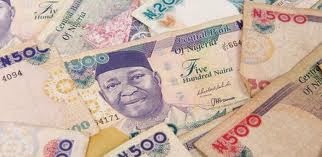
=N=5,000,($31) =N=2,000 ($12), or even =N=1,000 ($6). It is no news that
votes are bought for as low as =N=500 ($3) or even with a pint-size
portion of rice! With the buying of mandate, political office holders
have no social contract with the people to improve their economic
well-being. Who suffers? The people! Also, because of what has been
termed “representational corruption”, Nigerian politicians earn far more
than their colleagues in more developed societies like the UK and
India. All this means that the funds that ordinarily should have been
available for catering for the economic well-being of the people are
reduced.
Second is the tragedy of avoidance of politics by some of the best
brains in Nigeria. Nigeria does not have a dearth of thinking
individuals who truly have the interest of the country at heart. The
problem is that most of these people avoid politics. Where are the
intellectuals? You hear them say, “It’s a dirty game” and that they
don’t want to stain their hard earned reputations. This has not been
helpful as can be seen in the crop of leaders that rule the country
today. Nigeria indeed has and can produce better leaders. Again, good
governance can only be championed by a ruling class that is
developmental in every sense of the word. Therefore, our good materials
must be encouraged to come out to salvage the country in every stratum
of government the lack of which at the moment injures the prospects for
good governance while also contributing to the impoverishment of
Nigerians.
Third, good governance is again harmed by the ease at which people
resort to violence. Political violence is becoming a habit in Nigeria.
With violence, good governance becomes a secondary consideration in
political chess game. A leading scholar simply captures it as “violence
against democracy”. Today, violence (including the use of bombs) is now
an instrument that is deployed for group and individual interest. For
the political class, the habit of violence is one where political
competition amounts to what Claude Ake referred to as “warfare” to the
extent that almost all the politically motivated murders in Nigeria are
still unresolved!
At the level of the people, violence is also becoming rampant as
buttressed by mob actions and violent ethno-religious conflicts. This
was the case in Jos and Niger. Today, the Boko Haram violence has made
the worth of the Nigerian life trivial to a point that people are no
longer moved with news headlines of tens of deaths. Violence thus
diminishes good governance and also undermines human development.
Four is the absence of issue-based politics. With the massive
developmental challenges facing the country, it is pathetic that issues
of zoning and clandestine term agreements are enjoying the attention of
contenders and their followers. What sense is in zoning in the midst of
poverty, hunger and disease? Does poverty have an ethnic name that makes
it only Yoruba, Hausa or Igbo? Good governance is driven by minds that
are less concerned with petty issues of state of origin and other
sectarian considerations.
Five is the issue of corruption. Along with the Boko Haram crisis,
the fight against corruption is the most important fight in today’s
Nigeria even though, the Economic and Financial Crimes Commission (EFCC)
and sister organizations are doing their bit and could do more with the
support of the judiciary, the people and the civil society. Corruption,
if left unchallenged will destabilize a country’s efforts at fighting
poverty and hinder economic growth and development. According to
Mahmoud Moustafa of the World Bank fame, “empirical studies show that
countries with better redistribution of wealth enjoy longer periods of
economic development ... and countries suffering from corruption cannot
implement sound redistribution policies and thus are not expected to
take benefit from sustainable economic development despite embarking
upon economic growth from time to time for some reason or the other”.
Thus countries that have low corruption index enjoy positive growth
and development by providing greatest happiness for the greatest number
of the people while harmful consequence is the case in a country with
high corruption index. In addition, countries with high corruption
index also experiences dysfunctional institutions, unfair and unequal
treatments and constant encroachment of the rule of law.
Six is the problem of ethnicity. I must say that ethnicity in its
self is not a bad thing if it promotes healthy competition among the
groups that make up the Nigerian state. But it has historically been a
justification for violence, promotion of redundancy and bad governance.
People have been killed for no other reason than by the fact that they
are from another ethnic group. Mediocre and run of the mills individuals
have been retained in public offices for no other reason than the
ethnic group that they represent all in the name of satisfying the
federal character thereby depriving the country of quality leadership
based on merits.
Conclusion: What Role for the People and their Leaders?
I would conclude by stating that while good governance aid the economic well-being of the people, it is critical for both the people and their leaders to take certain actions. The leaders by now know what they should do as represented in the need to prioritise the economic well-being of the people, promote the democratisation of the polity through the strengthening of institutions and embracing transparency and accountability. Leaders should commit themselves to ensuring good governance at all levels. The legislature must strive to gain the support of the people by becoming proactive in its promotion of good governance. The legislators in the performance of their oversights functions should watch the executive and ensure that good policies are implemented for the benefit of the people.
For the people, they must also become proactive. Civil society
Organizations and community based organizations as representatives of
the people should strengthen good governance from below by providing the
people with the tools they need to question and take charge of their
future. The media must also continue to hold the government accountable
to the people while Traditional rulers should avoid confirming
chieftaincy titles on corrupt politicians or their cronies who don’t
have any feasible means of livelihood other than being friends of
political office holders or their spouses. The intellectual class should
also take up the challenge of providing a critical intellectual
opposition to government. Specifically, they should constantly engage
the government on policies and actions that will boost the
socio-economic well being of the people and thereby enhance our
democratic development.
Being the excerpts of a paper delivered in Lagos recently
Source: Sahara Reporters
Saturday, November 3, 2012
BEYOND THE BOKO HARAM NEGOTIATION WITH THE FEDERAL GOVERNMENT OF NIGERIA
The Boko Haram crisis started on the
heels of the Peoples Democratic Party (PDP) presidential nomination processes
of 2011. The wanton wastage of lives and property is strictly a political
retaliation against the candidacy and eventual election of Goodluck Jonathan. The
president confirmed this himself by saying that the Boko Haram has members in
the present political ruling class including his cabinet. Recent revelations
have indicted some of them but they are still free, with no meaningful
investigation or prosecution. It appears that there is a high-powered
conspiracy of the politically aggrieved to deal with the Jonathan presidency. It
is rather unfortunate that the leadership of this same PDP have not engaged
themselves on the fundamental issues troubling the party internally.
When the president came up with the idea
of the single-term tenure, it was the Action Congress of Nigeria (ACN) that
opposed it vehemently. The Northern leaders who felt cheated by the election of
President Jonathan in 2011 would have supported the single-term tenure if it
has scaled through the National Assembly. Attacks are launched whenever there
is any comment or debate that puts Jonathan forward as the best candidate for
the 2015 presidential election. Attacks are however suspended whenever there is
an anti-Jonathan campaign at any level e.g. the Fuel Subsidy Removal Protest at
the Freedom Park in Lagos.
The Boko Haram leadership has defended
the sect as “fighting for God”. But this is far-fetched, knowing fully well the
genesis of the crisis – the election of President Goodluck Jonathan. Members of
the sect pretend as if the mass destruction of life in the North, and the
comprehensive economic wreckage serves anyone any good. The ruling class
thought that the presidency can put an end to insurrection in any region of the
country.
There were once the militants in the
Niger-Delta creeks that fought vehemently against perceived marginalization of
its people leading to wanton wastage of lives and properties. The Igbos are
still aggrieved that they have not had a democratically elected president in
the presidential villa since Independence over 50 years ago. It has been said
over and over again that no region has the monopoly of violence. Those who
think destroying the once peaceful and serene environments in most parts of the
North would meet their agitation should have a rethink.
The whole crisis as it stands now is
beyond Goodluck Jonathan, and his presidency as of today. It requires all
Nigerians’ attention and collective response. The ruling class should not play
to the gallery when it comes to the issue of security. It is when we have
internal security that we can boast of political stability and economic growth
and development. The convocation of a National Conference is long overdue. Many
issues still trail the political injustices across the length and breadth of
Nigeria. The National assembly should, for once, climb down its high legislative
horse, and accept that Nigeria needs to realign its political infrastructure to
survive.
There cannot be a State of Emergency when
there is an avenue that accommodates every citizen irrespective of their
political inclination to sit at a roundtable. The best time to call for a
National Conference is now.
Labels:
ACN,
boko haram,
election,
Freedom,
fuel,
Goodluck,
haram,
leadership,
marginalization,
militants,
national,
National Conference,
Niger-Delta,
PDP,
peaceful,
peoples,
political,
Security,
subsidy,
violence
Saturday, May 5, 2012
NAIJA GOVERNANCE: WHERE I STAND
Irrespective of the number of
years of military rule in Nigeria, I am in the class of the people that
believes that Nigeria ought to be better and greater by now. This is not
because of the political manifestos of our leaders or the freedom of
expression. I would not want us to start the debate of whether Nigeria is a
nation or a country. Politics without principles will only plunge our Nigeria
deeper and deeper in corruption and injustice.
In Nigeria today, anyone that
wants to make a difference is seen as an antagonist. Martin Luther King (Jr.)
was seen as such in America many years ago. However the result of his “antagonism”
is there today for everyone to see – Barrack Obama. Records are meant to be
broken, bars are meant to be raised. We cannot say that investors should come
into Nigeria when we are not ready to empower our people. The enduring legacies
of our founding fathers are still in place today in various structures and
institutions. Chief Obafemi Awolowo craved for the empowerment of the
Southwest. Nigerians have benefited from his legacy of free education today in
structures like the Obafemi Awolowo University. The Coca House and the Nigerian
Television Authority both located in Ibadan are the results of his vision for
Nigeria.
If at all we have been following
the trends in Nigeria, we would have noticed some great disparity between what
our leaders say and what they do. That is where the value edge seems to be
falling off before our own very eyes. Nigerians have to begin to shoot at their
target – the ideal Nigeria. To achieve this, I strongly believe that what we
need to fear is fear itself. We are in a new era, we are in a new age, and we
are not supposed to be given what we do not bargain for as a people. When we vote,
we should put aside sentiments, resentments and frivolities. If our leaders
perform below expectation, let us arise to challenge them. If they refuse to
listen, then let us ask for their recall at their constituencies. Enough is
enough.
Let us come up to the round table
and discuss the way forward for our dear Nigeria. This is one of the reasons
why this page has been put up for us to really dig deep into the basics of
rebuilding our dear Nigeria. If Nigerians succeed abroad, then they should be
able to succeed here in Nigeria. Let us remember that the more we keep silent,
the more we become more vulnerable in our own Nigeria. The ruling class in
Nigeria today is not up to 5% of the entire Nigerian population. Let us remind
our leaders that they are leaders because we are followers. Let us hold them
accountable and begin to think of voting out the “benchwarmers” amongst them. Let
us free our minds and liberate our mentality. Post relevant suggestions, comments
and constructive criticisms and let us break the vicious cycle of bad
leadership and value disorientation. The New Nigeria would not be a coincidence. God
bless Nigeria.
My Nigerian Vision: I see Nigeria in the future having solid
infrastructural development, utilizing state-of-the-art Information Technology
facilities and well-trained and well-remunerated public and civil servants. I
see Nigeria with a master plan that encompasses all the sectors of the economy
with a view to planning for the security, environment and education of our
youths. I see the best Nigerian technocrats giving the best advice on achieving
the vision of a new Nigeria. Welcome to the future!!!
Subscribe to:
Posts (Atom)


